

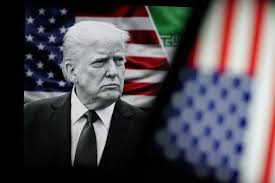
When journalists report on war, their responsibility is to show the reality of violence, destruction, and human suffering. Yet under Donald Trump’s administration, the war with Iran has often been presented in language closer to entertainment than tragedy. Military operations have been branded with dramatic names, social media posts have mixed combat footage with gaming-style visuals, and public messaging has treated warfare as if it were part of a spectacle rather than a humanitarian disaster.
By Nan Levinson
Modern warfare has increasingly blurred the line between reality and entertainment. Years ago, distinguishing between the names of video games and actual military operations was already difficult. Today, with names like “Operation Epic Fury,” that distinction has nearly disappeared. Trump’s administration openly embraced dramatic branding and online propaganda that framed bombings and military strikes like highlights from sports or action games. Videos shared online combined scenes of explosions with athletic victories, turning conflict into something packaged for excitement and attention.
The American military has long used game-inspired imagery in recruitment campaigns. Simulations, action-driven advertisements, and superhero-style visuals have often been used to attract younger audiences. However, what makes this moment different is the direct involvement of the White House in promoting war through entertainment-style messaging. Previous presidents often tried to maintain a tone of seriousness and restraint when discussing military conflict. Trump’s administration instead leaned into spectacle, prioritizing attention-grabbing imagery and exaggerated rhetoric.
For journalists, this creates enormous challenges. Their job is not to entertain but to explain what is happening, why it matters, and who is suffering. Yet reporting on the Iran conflict has been complicated by constantly changing justifications for the war. Different officials offered different reasons for military action, including preventing threats, stopping nuclear development, fighting terrorism, promoting regime change, and spreading peace. At times, Trump himself contradicted earlier statements, making it difficult for reporters to clearly define the purpose or end goals of the conflict.
The uncertainty surrounding the war reflects a broader “polycrisis,” where multiple crises overlap and intensify one another. The Iran war affects military strategy, oil prices, global markets, international politics, environmental damage, and civilian lives all at once. Journalists covering economics, diplomacy, defense, and even sports have all found themselves pulled into the story. Rising fuel prices, tensions in the Middle East, constitutional debates in the United States, and comparisons to the Iraq War have all become part of the wider narrative.
Reporting from Iran itself has also become increasingly difficult. Press freedom in the country remains heavily restricted, foreign journalists face severe limitations, and local reporters risk imprisonment. Many international media organizations have had to rely on indirect sources, human rights groups, or social media footage to verify information. Some journalists have even faced detention or violence while attempting to cover developments in the region.
At the same time, American media organizations have struggled with their own limitations. Restrictions placed on Pentagon reporters, pressure against broadcasters, and cuts to international reporting resources have reduced access to reliable information. Trump’s communication strategy has further complicated matters by relying heavily on unpredictable interviews and social media statements that often dominate headlines before being properly verified.
Another major issue in war coverage has been the lack of context. Iran is frequently portrayed only as a battlefield or political enemy, while its people, culture, and history receive far less attention. Many Americans know little about the country beyond political tensions. Without deeper historical understanding, news coverage can unintentionally reinforce simplistic “good versus evil” narratives rather than helping audiences understand the full complexity of the conflict.
Despite these challenges, some journalists and independent writers have continued to provide thoughtful analysis. Alternative newsletters, investigative reporters, and international correspondents have pushed back against sensationalized narratives by emphasizing the long-term consequences of war. As the conflict dragged on and criticism increased, even mainstream media outlets began describing the situation as a possible “quagmire,” echoing fears of another prolonged Middle Eastern conflict.
FAQS
What is the main argument of “Trump’s Game for War”?
The article argues that the Trump administration presented war with Iran in an entertainment-style manner, using dramatic branding and gaming imagery that distracted from the real human suffering caused by conflict.
Why is reporting on the Iran war difficult for journalists?
Journalists face challenges such as limited access to Iran, changing political narratives, government restrictions, misinformation, and the fast-moving nature of the conflict.
What does the term “polycrisis” mean in the article?
Polycrisis refers to multiple crises happening at the same time and affecting one another, including military conflict, economic instability, political tensions, and humanitarian issues.
How did the Trump administration use media during the war?
The administration relied heavily on social media, dramatic military operation names, and public messaging designed to create attention and excitement around the conflict.
Why is context important in war reporting?
Context helps audiences understand the history, culture, and political background behind a conflict, preventing oversimplified narratives and misinformation.
What concerns are raised about press freedom in Iran?
Iran heavily restricts journalism, controls media operations, and limits foreign reporting, making it difficult for accurate information to reach the outside world.
How has war coverage changed in modern media?
Modern war coverage is often influenced by social media, rapid news cycles, and entertainment-style presentation, which can sometimes reduce serious conflicts to political spectacle.
What role should journalists play during wartime?
Journalists should provide accurate information, challenge misinformation, give historical context, and highlight the human impact of war rather than promoting propaganda or sensationalism.
Conclusion
The Iran war demonstrates how modern political communication can transform warfare into spectacle. Under Trump’s administration, military conflict was often framed through dramatic slogans, gaming-style imagery, and entertainment-focused messaging that minimized the true human cost of violence. For journalists, this created an especially difficult environment where facts shifted rapidly, access to information was limited, and public attention was constantly redirected.
Yet the role of journalism remains essential. Reporters must continue to provide context, verify claims, and remind audiences that war is not a performance or a game. Behind every headline are real people facing loss, displacement, fear, and uncertainty. Responsible journalism helps society look beyond political branding and confront the deeper realities of conflict. In times of war, accurate reporting is not only a professional duty but also a public necessity.
