

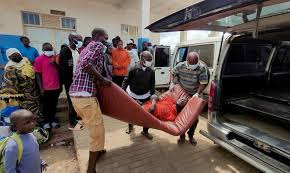
The World Health Organization (WHO) has officially declared the ongoing Ebola outbreak in the Democratic Republic of Congo (DR Congo) a Public Health Emergency of International Concern. The outbreak, centered in the eastern Ituri province, has already caused significant concern after hundreds of suspected infections and dozens of deaths were reported.
According to health officials, around 246 suspected Ebola cases and nearly 80 deaths have been recorded so far. While the WHO stated that the situation does not currently qualify as a pandemic-level emergency, experts warned that the outbreak could become far more widespread than current figures suggest. The agency emphasized the growing risk of local and regional transmission, particularly due to cross-border travel and population movement.
Bundibugyo Virus Behind the Outbreak
The current outbreak is being caused by the Bundibugyo strain of the Ebola virus. Unlike the Zaire strain, which has approved vaccines and treatments available, there are currently no licensed vaccines or specific medicines for Bundibugyo Ebola. This has increased concerns among international health authorities.
Early symptoms of Ebola often resemble common flu-like illnesses, including fever, headache, muscle pain, fatigue, and sore throat. As the disease progresses, patients may experience vomiting, diarrhoea, skin rashes, internal organ failure, and severe bleeding.
The WHO confirmed at least eight laboratory-tested Ebola cases across three health zones in Ituri province, including Bunia, Mongwalu, and Rwampara. One infected patient has also been identified in the capital city, Kinshasa, after traveling from the affected region.
Spread Beyond DR Congo Raises Alarm
Health authorities have confirmed that the virus has already crossed DR Congo’s borders. Neighboring Uganda reported two confirmed Ebola cases, including a 59-year-old Congolese man who later died from the disease. Ugandan officials said the victim’s body was returned to DR Congo for burial.
Reports also revealed a confirmed Ebola case in the eastern Congolese city of Goma, an area currently under the control of M23 rebels. The ongoing conflict and unstable security conditions in the region are making outbreak response efforts even more difficult.
Meanwhile, several American citizens in DR Congo were reportedly exposed to Ebola. According to reports, at least one individual showed symptoms, although no infections had been officially confirmed at the time. The US government was said to be arranging evacuations for those exposed.
The US Centers for Disease Control and Prevention (CDC) announced plans to send additional staff to both DR Congo and Uganda to assist with outbreak management and surveillance efforts.
Public Health Measures Become Critical
Africa CDC Director General Jean Kaseya urged communities to follow strict public health measures to prevent further spread of the disease. He specifically warned against unsafe funeral practices, which played a major role in spreading Ebola during previous outbreaks.
Traditional community funerals often involve washing and touching the bodies of deceased relatives, which can expose people to infected bodily fluids. Health experts are encouraging safer burial practices and immediate isolation of suspected patients.
The WHO also highlighted several factors increasing the risk of rapid transmission, including:
- High population movement across borders
- Ongoing humanitarian and security crises
- Urban outbreak locations
- Informal healthcare systems with limited infection control
Countries neighboring DR Congo, including Rwanda and Uganda, have strengthened border screening and surveillance systems as precautionary measures.
WHO Advises Against Border Closures
Despite growing concerns, the WHO advised countries not to close borders or impose unnecessary travel restrictions. The organization stated that such actions are often driven by fear rather than scientific evidence.
Instead, the WHO recommended stronger surveillance systems, rapid testing, contact tracing, emergency operation centers, and immediate isolation of confirmed Ebola patients. Officials also stressed that infected individuals should remain under treatment until two virus-specific tests conducted at least 48 hours apart return negative results.
WHO Director-General Dr. Tedros Adhanom Ghebreyesus warned that there are still major uncertainties regarding the true number of infections and the actual geographic spread of the virus.
Understanding Ebola and Its Origins
Ebola is a rare but highly dangerous viral disease first discovered in 1976 in what is now the Democratic Republic of Congo. Scientists believe the virus originally spread from infected animals, particularly fruit bats, to humans.
The disease spreads through direct contact with infected bodily fluids such as blood, saliva, vomit, or sweat. Symptoms can appear anywhere between two and 21 days after exposure.
The Bundibugyo strain involved in the current outbreak has caused death rates of around 30% in previous outbreaks. Overall, Ebola outbreaks across Africa have killed more than 15,000 people over the past five decades.
DR Congo has experienced multiple Ebola outbreaks over the years, including the country’s deadliest outbreak between 2018 and 2020, which claimed nearly 2,300 lives. Another outbreak last year resulted in 45 deaths in a remote region.
FAQS
What caused the current Ebola outbreak in DR Congo?
The outbreak is being caused by the Bundibugyo strain of the Ebola virus, which currently has no approved vaccine or treatment.
How does Ebola spread?
Ebola spreads through direct contact with infected bodily fluids such as blood, vomit, sweat, saliva, or contaminated surfaces.
What are the symptoms of Ebola?
Common symptoms include fever, headache, muscle pain, fatigue, vomiting, diarrhoea, rash, and bleeding.
Is there a cure or vaccine for Bundibugyo Ebola?
No approved vaccines or medicines currently exist specifically for the Bundibugyo strain of Ebola.
Why is the WHO concerned about this outbreak?
The WHO fears the outbreak may be larger than currently reported and could spread regionally due to travel, conflict, and weak healthcare infrastructure.
Which countries are at highest risk?
Countries neighboring DR Congo, including Uganda and Rwanda, are considered high-risk because of cross-border trade and movement.
When was Ebola first discovered?
Ebola was first identified in 1976 in what is now the Democratic Republic of Congo.
How deadly is Ebola?
Fatality rates vary by strain, but Ebola can be extremely deadly, with some outbreaks killing up to 50% of infected patients.
Conclusion
The latest Ebola outbreak in DR Congo has once again highlighted the global threat posed by infectious diseases, especially in regions affected by conflict, weak healthcare systems, and high population movement. With no approved vaccine or treatment available for the Bundibugyo strain, health authorities face enormous challenges in containing the virus before it spreads further across borders.
International cooperation, rapid response measures, public awareness, and strict health protocols will play a critical role in limiting infections and saving lives. While the WHO has stopped short of calling the outbreak a pandemic, officials continue to warn that the situation could worsen rapidly if containment efforts fail.
