

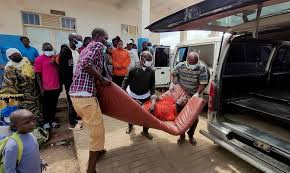
The Director-General of the World Health Organization has officially declared the Ebola outbreak caused by the Bundibugyo virus in the Democratic Republic of the Congo and Uganda a Public Health Emergency of International Concern (PHEIC) under the International Health Regulations (2005). However, WHO clarified that the outbreak does not currently meet the criteria for a pandemic emergency.
This declaration followed consultations with both affected countries and a detailed assessment of scientific evidence, public health risks, and the potential for international spread. WHO acknowledged the efforts of the Democratic Republic of the Congo and Uganda for their transparency, rapid response measures, and cooperation with the international community.
Why WHO Declared a Global Health Emergency
WHO stated that the outbreak is considered extraordinary because of the rapid rise in suspected cases, unexplained deaths, and confirmed cross-border infections. As of 16 May 2026, health authorities reported:
- Eight laboratory-confirmed cases in Ituri Province, DRC
- 246 suspected infections
- 80 suspected deaths
- Multiple affected health zones, including Bunia, Rwampara, and Mongbwalu
- Two confirmed cases in Kampala, Uganda linked to travel from the DRC
Authorities also identified several unusual clusters of deaths showing symptoms consistent with Bundibugyo virus disease. Healthcare-associated infections among medical workers raised additional concerns regarding infection prevention and hospital safety measures.
WHO warned that the actual number of infections could be much higher than current reports suggest because of limited surveillance, insecurity in affected regions, population movement, and challenges in tracing epidemiological links.
Growing Regional and International Risk
The spread of confirmed cases into Uganda highlighted the danger of regional transmission. Neighboring countries bordering the Democratic Republic of the Congo are considered highly vulnerable due to active trade routes, migration, and cross-border movement.
WHO emphasized that urban and semi-urban transmission areas, combined with humanitarian instability and weak healthcare systems, increase the possibility of wider spread across Central and East Africa.
Another major concern is the absence of approved vaccines or specific treatments for the Bundibugyo strain of Ebola, unlike the Ebola-Zaire variant.
WHO’s Main Recommendations
WHO issued several urgent recommendations for affected and neighboring countries, focusing on containment, preparedness, and public safety.
Strengthening Emergency Coordination
Affected countries were advised to activate national emergency management systems and establish emergency operation centers to coordinate outbreak response activities, including surveillance, laboratory testing, contact tracing, and patient care.
Improving Surveillance and Testing
WHO urged governments to expand surveillance systems, improve community reporting of deaths and illnesses, and strengthen laboratory capacity for Bundibugyo virus testing across affected and high-risk regions.
Infection Prevention in Hospitals
Healthcare facilities were instructed to strengthen infection prevention and control measures, provide proper personal protective equipment (PPE), and ensure healthcare workers receive adequate training and support.
Community Engagement and Public Awareness
WHO stressed the importance of involving local leaders, religious figures, and communities in awareness campaigns to improve early detection, encourage treatment-seeking behavior, and reduce misinformation.
Travel and Border Measures
The organization recommended:
- Exit screening at airports, ports, and major border crossings
- Restricting international travel for confirmed cases and contacts
- Enhanced monitoring at internal road networks
- Avoiding unnecessary border closures or trade restrictions
WHO explained that closing borders often encourages unmonitored movement and may worsen the spread of disease.
Safe Burials and Funeral Practices
Authorities were encouraged to implement safe and dignified burial procedures conducted by trained personnel while respecting cultural traditions and reducing transmission risks.
Preparedness for Neighboring Countries
Countries sharing land borders with affected areas were advised to urgently strengthen preparedness plans, establish rapid response teams, and improve diagnostic capacity. Any newly detected suspected case should be treated as a health emergency requiring immediate isolation, investigation, and contact tracing.
WHO also encouraged at-risk countries to prepare approvals for investigational vaccines and treatments as part of emergency readiness.
Updated Clarification About Kinshasa Case
WHO later updated its statement regarding a suspected case reported in Kinshasa on 16 May 2026. Initial reports suggested it was a confirmed infection, but follow-up testing by the National Institute for Biomedical Research (INRB) returned a negative result for Bundibugyo virus. As a result, the individual is no longer considered a confirmed case.
FAQS
What is Bundibugyo virus disease?
Bundibugyo virus disease is a rare strain of Ebola caused by the Bundibugyo ebolavirus. It can lead to severe hemorrhagic fever, organ failure, and death in infected individuals.
Why did WHO declare the outbreak a global health emergency?
WHO declared the outbreak a Public Health Emergency of International Concern because of confirmed international spread, rising suspected cases and deaths, and the risk of wider regional transmission.
Is the outbreak considered a pandemic?
No. WHO stated that the outbreak does not currently meet the criteria for a pandemic emergency under the International Health Regulations.
Which countries are currently affected?
The outbreak has primarily affected the Democratic Republic of the Congo and Uganda, with confirmed cases linked to cross-border travel.
Are vaccines available for Bundibugyo Ebola?
At present, there are no approved vaccines or virus-specific treatments for the Bundibugyo strain of Ebola.
How is WHO responding to the outbreak?
WHO is coordinating with governments and international partners to improve surveillance, laboratory testing, contact tracing, infection prevention, and emergency response operations.
Should countries close borders to stop the spread?
WHO does not recommend border closures or trade restrictions, as these measures can disrupt response operations and encourage unmonitored travel routes.
What symptoms are associated with Bundibugyo virus disease?
Common symptoms include fever, fatigue, vomiting, diarrhea, bleeding, muscle pain, and severe weakness. In serious cases, the disease can lead to organ failure and death.
Conclusion
The Bundibugyo Ebola outbreak in the Democratic Republic of the Congo and Uganda represents a serious international public health threat that requires urgent global attention and coordinated action. Although WHO has not classified the situation as a pandemic emergency, the rapid spread, cross-border infections, healthcare worker deaths, and lack of approved treatments make the outbreak highly concerning.
WHO’s declaration of a Public Health Emergency of International Concern is intended to mobilize international cooperation, strengthen surveillance systems, and accelerate outbreak control measures before the situation worsens further. Continued transparency, community engagement, and rapid response efforts will be essential to limiting transmission and protecting vulnerable populations across the region.
