
Close Menu
Techwetalk

    Subscribe to Updates

    Get the latest creative news from FooBar about art, design and business.

    What's Hot

    Smart Glasses Display Live Captions to Help Deaf Travellers Follow Conversations

    November 10, 2026

    Public Blockchains Add Clearer Transaction Labels for Everyday Users

    November 10, 2026

    Stablecoin Issuers Face Monthly Reserve Attestations Under New Draft Rules

    November 9, 2026
    Facebook X (Twitter) Instagram
    Techwetalk
    • Home
    • AI
    • World News
    • Cybersecurity
    • Gaming
    • Reviews
    • Software
    • Startup
    Techwetalk
    Home»Blog»Divers Monitor Coral Reefs to Guide Restoration Work
    Blog

    Divers Monitor Coral Reefs to Guide Restoration Work

    Damon WoodBy Damon WoodNovember 2, 2026No Comments3 Mins Read0 Views
    Share Facebook Twitter Pinterest LinkedIn Tumblr Email WhatsApp Copy Link
    Follow Us
    Google News Flipboard Threads
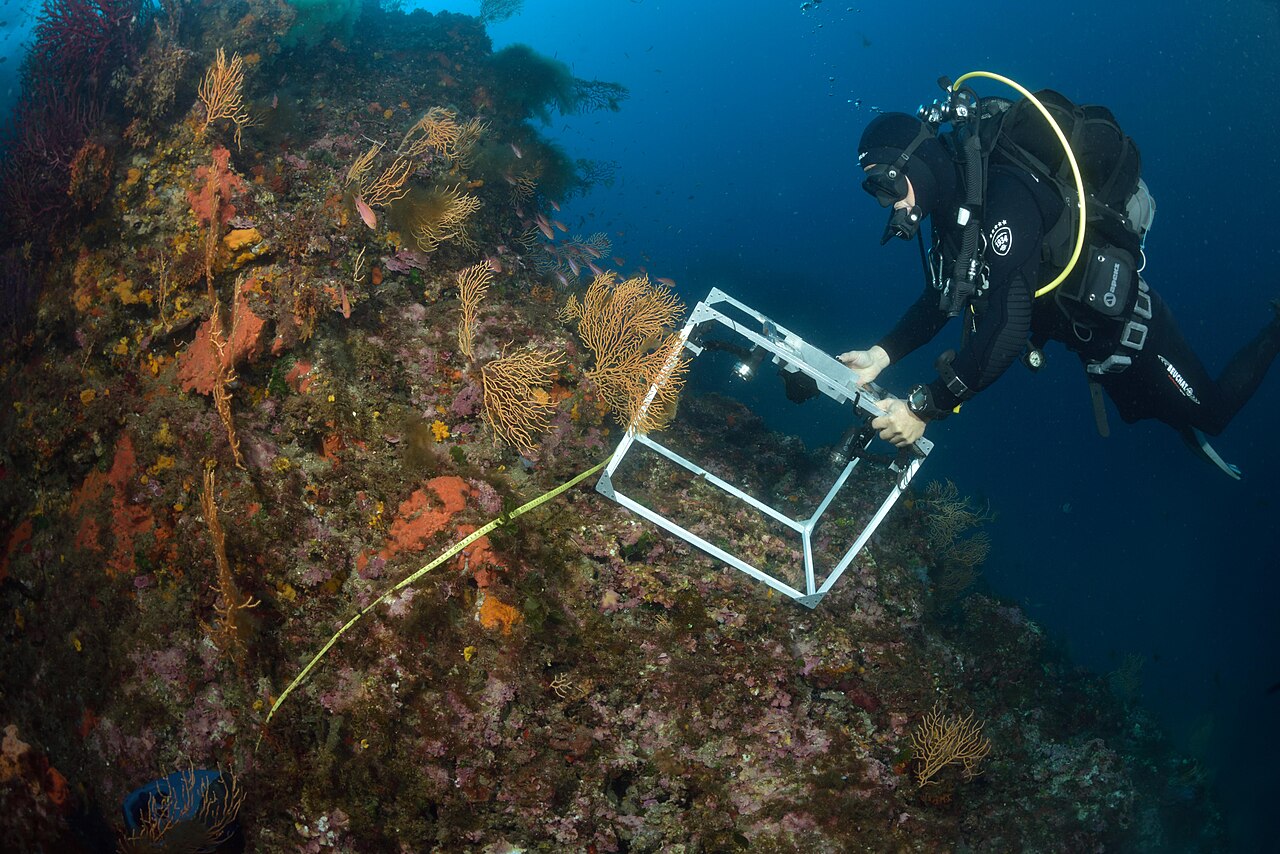
    A scuba diver monitoring a coral reef seabed with a photo frame
    Share
    Facebook Twitter LinkedIn Pinterest Email Copy Link

    Coral restoration has no shortage of enthusiasm: volunteers plant coral fragments, nurseries grow new colonies, and divers return damaged reefs to something like life. What it has lacked, historically, is proof. Which planting methods survive? Which sites recover on their own if simply left alone? A quieter discipline, systematic reef monitoring, is supplying the answers, as trained divers photograph and measure exactly the same sections of reef season after season.

    Photographs That Become Evidence

    The core technique is the photoquadrat: a frame of known size placed on the reef while a diver photographs straight down, creating images that software can analyse for coral cover, species and disease. Repeated over years, the photographs become a film of the reef’s life, showing bleaching events, regrowth and the slow competition between coral and algae in a way memory and impression never could. Research programmes coordinated with bodies such as NOAA use standardised versions of these surveys so results from different oceans can be compared directly.

    Monitoring also protects restoration budgets from wishful thinking. Sites where planted corals die repeatedly can be abandoned in favour of sites where survival is high, and factors that predict success, such as depth, water flow and protection from fishing, become visible in the data. Some programmes now add environmental DNA sampling and temperature loggers to the divers’ work, catching stresses that photographs alone would miss.

    Why Healthy Reefs Are Worth the Effort

    Reefs occupy a tiny fraction of the ocean floor yet support about a quarter of marine species, and they shelter coastlines from storm energy while underpinning fishing and tourism livelihoods. Marine heatwaves have made their decline impossible to ignore, with bleaching recorded on reefs in every ocean basin in recent years. Against that scale of loss, monitoring can look modest, even bureaucratic.

    Volunteers are widening the reach of the work. Trained recreational divers now contribute photographs to shared databases after learning the survey protocols, multiplying the number of reefs that can be revisited each year. Their images, checked by scientists, have flagged outbreaks of coral disease and invasive species early enough for a response to matter. Marine reserves use the same volunteer records to show visitors and fishing communities exactly how protection changes a reef over time, turning abstract rules into visible recovery. The model depends on consistency rather than expertise: a moderately good photograph taken in the same place every year is worth more than a brilliant one taken once.

    Its defenders answer that restoration without measurement is gardening in the dark. Every reef that recovers under a monitored programme teaches the next programme what to repeat, and every failure documented honestly saves another team from repeating it. In a field where time and warm water are both running short, that accumulated evidence may be the most valuable thing divers bring back to the surface.

    coral reefs marine science ocean conservation
    Share. Facebook Twitter Pinterest LinkedIn Tumblr Email WhatsApp Copy Link
    Damon Wood

    Related Posts

    Blog

    Smart Glasses Display Live Captions to Help Deaf Travellers Follow Conversations

    November 10, 2026
    Blog

    Public Blockchains Add Clearer Transaction Labels for Everyday Users

    November 10, 2026
    Blog

    Stablecoin Issuers Face Monthly Reserve Attestations Under New Draft Rules

    November 9, 2026
    Blog

    Smartphone Chips Benchmark Efficiency Gains in Everyday AI Tasks

    November 9, 2026
    Blog

    Second-Life Batteries From Electric Cars Settle Into Grid Storage Jobs

    November 8, 2026
    Blog

    Airport Terminals Reorganise Shuttle Pick-Up Zones to Cut Kerb Queues

    November 8, 2026
    Add A Comment
    Leave A Reply Cancel Reply

    Live Search Results
    Top Posts

    Euphoria is back with more shock and scandal, but mixed reviews

    May 18, 202638 Views

    AI Talent War: Tech Leaders Join OpenAI

    May 18, 202630 Views

    Israel built two military bases in Iraq before war on Iran: New York Times

    May 18, 202629 Views

    Balochistan reviews monsoon emergency plan

    May 17, 202628 Views

    The Beloved review – Javier Bardem turns in a career-scariest performance

    May 17, 202628 Views

    Off Campus review – hot fun for fans of bums, boobs, hockey and Heated Rivalry

    May 18, 202627 Views

    ‘Avedon’ Review: Ron Howard Frames Richard Avedon’s Legacy

    May 18, 202627 Views
    About Us

    Welcome to TechWeTalk your ultimate hub to discover, learn, and connect with technology. Dive into the latest trends in Gaming, AI,

    Cybersecurity, Startups, and Software, and stay ahead in the ever-evolving tech world with insights, guides, and community connections. #TechWeTalk

    Latest Post

    Smart Glasses Display Live Captions to Help Deaf Travellers Follow Conversations

    November 10, 2026

    Public Blockchains Add Clearer Transaction Labels for Everyday Users

    November 10, 2026

    Stablecoin Issuers Face Monthly Reserve Attestations Under New Draft Rules

    November 9, 2026
    Contact Us

    If you have any questions or need further information, feel free to reach out to us at

    Email: tech4english@gmail. com
    Phone: +358 44 9523404

    Address: 757 Coffman Alley
    Elizabethtown, KY 42701

    © 2026 ThemeSphere. Designed by TechWeTalk.
    • About Us
    • Contact Us
    • Disclaimer
    • Privacy Policy
    • Terms & Conditions
    • Write For Us
    • Sitemap

    Type above and press Enter to search. Press Esc to cancel.

    WhatsApp us